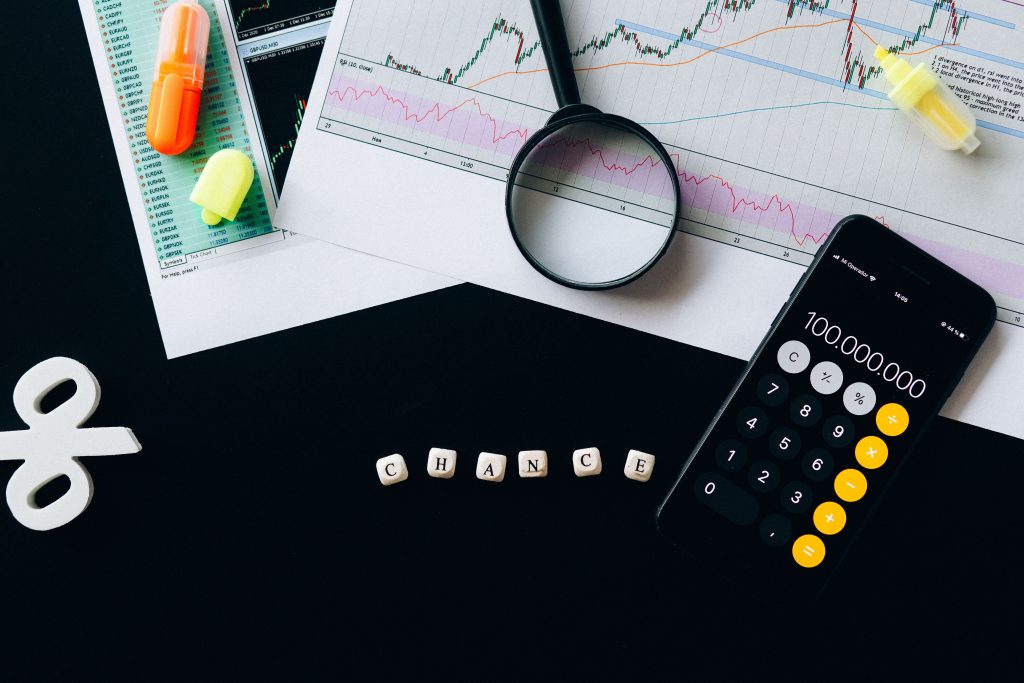
Leverage is one of the most powerful—and dangerous—tools available to traders. It allows you to control a much larger position in the market than your own capital would normally permit by using borrowed funds (or equivalent exposure) from a broker. While it can multiply profits, it multiplies losses by the same factor. Understanding exactly how it works is essential before using it.
What Is Leverage?
Leverage in trading means using a relatively small amount of your own money (called margin) as a deposit to open a position whose full value is significantly larger. The broker effectively provides the rest of the exposure.
It is expressed as a ratio or multiple:
10:1 (or 10×) means every $1 of your capital controls $10 of market exposure.
50:1 means every $1 controls $50.
100:1 means every $1 controls $100.
The formula is straightforward:
Leverage = Total Position Size ÷ Margin (your capital committed)
If you deposit $1,000 and open a $10,000 position, you are using 10× leverage.
How Leverage Actually Works
When you open a leveraged trade:
You post the required initial margin (a percentage of the full position value).
The broker grants you exposure to the full position size.
Your profit or loss is calculated on the full position size, not just your margin.
Gains or losses are applied to your account equity.
Simple example Suppose a stock trades at $100 and you want exposure to 100 shares ($10,000 total value).
Without leverage: You pay the full $10,000. A 5% rise to $105 gives you a $500 profit (5% return on your capital).
With 10:1 leverage: You post only $1,000 margin. The same 5% rise still produces a $500 profit—but that is now a 50% return on your $1,000. Conversely, a 5% drop produces a $500 loss (50% of your capital). A 10% adverse move wipes out your entire margin.
The same principle applies across markets. In forex, a 1% move on a highly leveraged position can produce returns (or losses) of 30–50% or more relative to the margin posted.
Margin vs. Leverage
These terms are closely related but not identical:
Margin is the actual cash (or collateral) you must deposit to open and maintain the position.
Leverage is the resulting ratio of exposure to that margin.
Margin requirement = 1 ÷ leverage ratio.
Thus:
10:1 leverage → 10% margin
50:1 leverage → 2% margin
100:1 leverage → 1% margin
Brokers also set a maintenance margin. If your equity falls below this level due to losses, you face a margin call (you must deposit more funds) or automatic liquidation (the broker closes your position to limit further losses).
Leverage Across Different Markets
Leverage availability varies widely by asset class and jurisdiction:
Market Typical Retail Leverage (Regulated) Notes
Forex (major pairs) 30:1 (EU/UK/AU), 50:1 (US). Highest because daily moves are relatively small
Forex (minors) 20:1 Slightly lower
Stock indices 20:1 —
Individual stocks 5:1 (CFDs in EU), 2:1 (US margin) Much more restricted
Commodities 10:1 —
Cryptocurrencies 2:1 (EU CFDs). Highly volatile, so low leverage
Offshore or less-regulated brokers may advertise 100:1, 500:1, or even higher, but these come with significantly greater counterparty and operational risk.
In traditional stock margin accounts (U.S.), Regulation T generally limits overnight leverage to 2:1.
Day traders with accounts over $25,000 may access higher intraday buying power under pattern-day-trader rules.
Benefits of Leverage

Capital efficiency: Free up capital for other trades or diversification.
Amplified returns: Small favorable price moves can generate large percentage gains on the capital at risk.
Access to larger markets: Trade instruments or position sizes that would otherwise be out of reach.
Ability to profit from short-term moves: Useful for day traders and scalpers in liquid markets such as forex.
The Risks — Why Leverage Is a Double-Edged Sword
Leverage does not change the probability of a trade being profitable; it only scales the outcome.
Key risks include:
Amplified losses: A modest adverse move can erase a large portion (or all) of your capital.
Margin calls and liquidation: Rapid market moves can force position closures at unfavorable prices.
Psychological pressure: Watching large swings relative to your account balance often leads to emotional decision-making.
Interest/financing costs: Holding leveraged positions overnight usually incurs borrowing or swap costs.
Gap risk: Markets can open far beyond your stop-loss level (especially over weekends or news events), causing losses that exceed your margin.
A useful rule of thumb: the percentage market move that can wipe out your margin is roughly 100 ÷ leverage.
At 10× leverage, a 10% adverse move can liquidate the position.
At 50×, only a 2% move is needed.
Practical Risk Management Guidelines
Use far less leverage than the maximum offered. Many experienced traders stay under 5–10× effective leverage.
Risk only a small percentage of total capital per trade (commonly 0.5–2%).
Always use stop-losses and calculate position size based on the stop distance, not the maximum leverage available.
Monitor margin level closely. Keep free margin comfortably above requirements.
Understand the instrument’s volatility. Higher-volatility assets require lower leverage.
Avoid over-leveraging around major news events.
Conclusion
Leverage works by letting you control a large notional position with a small deposit of capital. Profits and losses are calculated on the full position size, which is why the same market move produces dramatically different percentage returns on your equity depending on the leverage used.
It is a tool that can accelerate growth when markets move in your favor and accelerate destruction when they do not. The difference between successful and unsuccessful leveraged traders is rarely the size of the leverage available—it is the discipline applied in position sizing, risk limits, and emotional control.
Before trading with leverage, thoroughly understand the margin requirements, liquidation rules, and costs of the specific broker and instrument you plan to use. Treat leverage with respect: it multiplies everything, including mistakes.