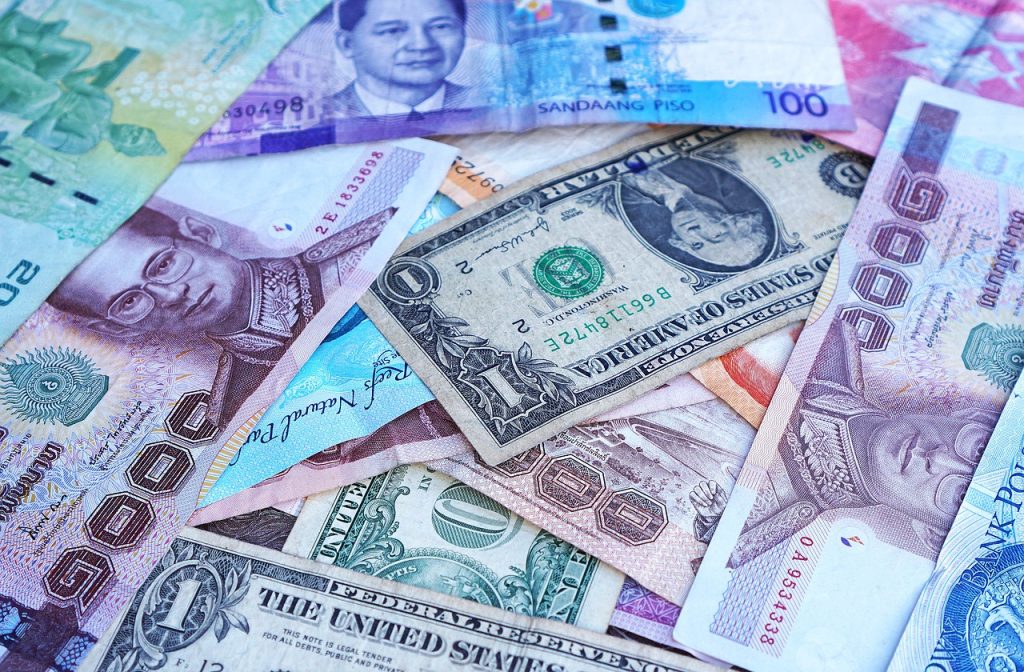
The foreign exchange market—commonly called forex or FX—is the global marketplace where currencies are bought and sold. It is the largest and most liquid financial market in the world, with average daily trading volumes reaching $7.5 trillion (according to the Bank for International Settlements’ 2022 triennial survey) and some more recent estimates putting the figure higher, around $9.6 trillion. forexbrokers.com
Unlike stock markets, forex has no single physical exchange or centralized location. It operates as a decentralized over-the-counter (OTC) network connecting banks, financial institutions, corporations, governments, and individual traders around the globe through electronic systems.
What Exactly Is Forex Trading?
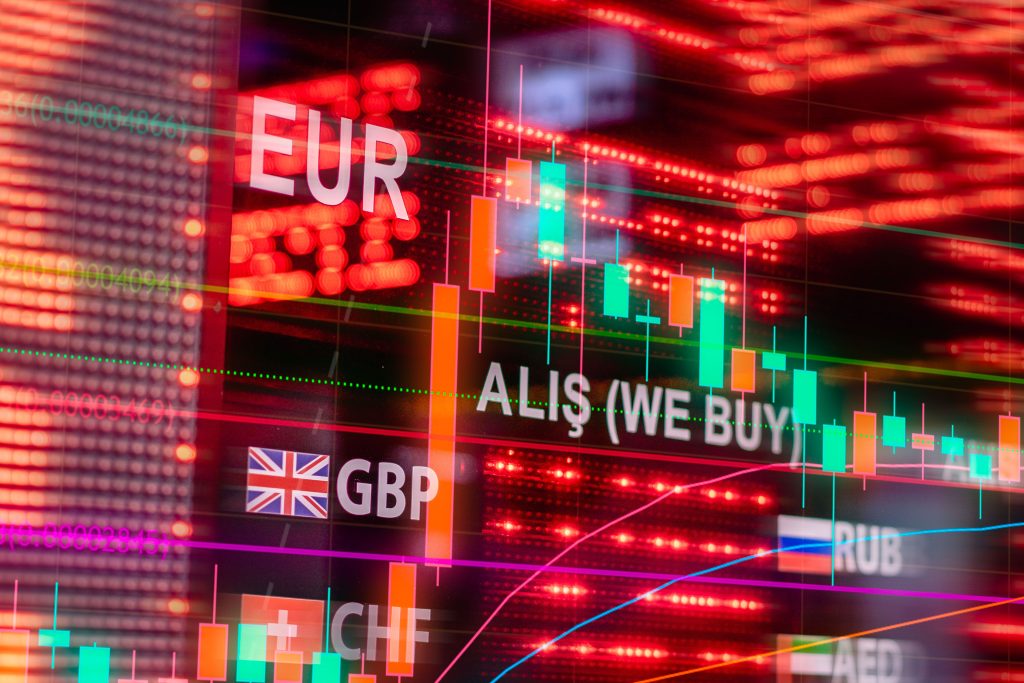
Forex trading involves exchanging one currency for another. Every transaction occurs in currency pairs. When you buy one currency, you simultaneously sell another.
For example, in the EUR/USD pair:
• EUR is the base currency
• USD is the quote currency
If EUR/USD is quoted at 1.1200, it means one euro costs 1.12 US dollars. Traders speculate on whether the base currency will strengthen or weaken relative to the quote currency.
People and institutions participate in forex for two main reasons:
• Practical needs — companies convert currencies for international trade or travelers exchange money.
• Speculation — traders aim to profit from changes in exchange rates.
How the Market Works
Currencies trade continuously across major financial centers. The market is open 24 hours a day, five days a week (from roughly Sunday 5 p.m. ET to Friday 5 p.m. ET), because trading shifts across time zones as the world turns.
Major trading sessions include:
• Sydney
• Tokyo (Asian session)
• London (European session — the largest by volume)
• New York (North American session)
The most active and liquid period is typically the overlap between the London and New York sessions (roughly 8 a.m. to 12 p.m. ET), when volatility and trading volume often peak.
There are three primary types of forex markets:
• Spot market — immediate exchange at the current rate (the most common for retail traders).
• Forward market — agreements to exchange currencies at a future date and predetermined rate.
• Futures market — standardized contracts traded on exchanges.
Currency Pairs: Majors, Minors, and Exotics
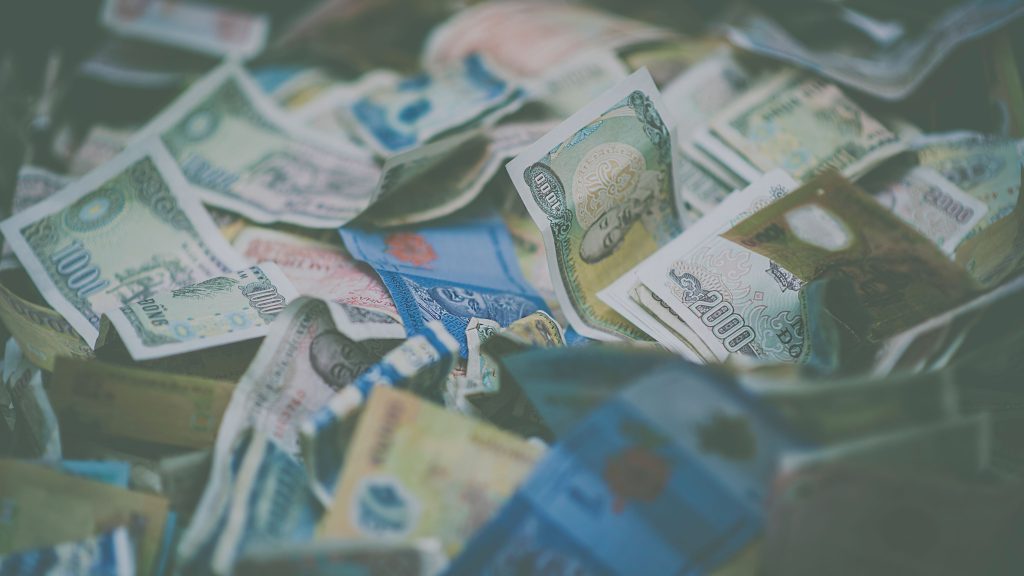
• Major pairs — Involve the US dollar and another major currency (e.g., EUR/USD, USD/JPY, GBP/USD, USD/CHF, AUD/USD, USD/CAD, NZD/USD). These account for the vast majority of trading volume and typically have the tightest spreads.
• Minor (or cross) pairs — Major currencies paired without the US dollar (e.g., EUR/GBP, EUR/JPY, GBP/JPY).
• Exotic pairs — A major currency paired with one from an emerging or smaller economy (e.g., USD/TRY, USD/ZAR, EUR/MXN). These tend to be less liquid and more volatile.
The US dollar appears in the majority of all forex transactions.
Essential Terminology
Understanding these terms is foundational:
• Pip — The standard unit of price movement. For most pairs, it is the fourth decimal place (0.0001). For yen pairs, it is usually the second decimal place (0.01).
• Lot — Standardized trade size. A standard lot is 100,000 units of the base currency; mini lots (10,000) and micro lots (1,000) are common for smaller accounts.
• Spread — The difference between the bid (sell) and ask (buy) price. This is a primary trading cost.
• Leverage — Allows traders to control a large position with a relatively small amount of capital (margin). For example, 50:1 leverage means $1,000 can control a $50,000 position. Leverage amplifies both gains and losses.
• Margin — The capital required to open and maintain a leveraged position.
Who Participates in the Forex Market?
Participants range from:
• Commercial and investment banks (the interbank market)
• Central banks (which influence rates through monetary policy)
• Hedge funds and institutional investors
• Multinational corporations (for hedging and trade)
• Retail traders (individuals accessing the market via brokers)
Retail trading has grown significantly thanks to online platforms and lower barriers to entry, though institutions still dominate overall volume.
Key Advantages
• Extremely high liquidity, especially in major pairs
• 24/5 accessibility
• Relatively low transaction costs for liquid pairs
• Ability to profit in both rising and falling markets (by going long or short)
• Low capital requirements to start (thanks to leverage and micro lots)
Important Risks You Must Understand

Forex trading carries substantial risk, particularly for retail participants. High leverage is a double-edged sword: a small adverse move can wipe out an account. Regulators in many jurisdictions report that a large majority of retail traders lose money (often cited in the 70–89% range depending on the region and period). legalclarity.org
Other risks include:
• Volatility driven by economic data, central bank decisions, geopolitical events, and interest rate differentials
• Overnight or weekend gaps
• Counterparty risk in the OTC environment
• The psychological challenges of managing leverage and emotions
Never trade with money you cannot afford to lose. Proper risk management—such as limiting risk per trade to 1% of your account, using stop-loss orders, and avoiding excessive leverage—is essential.
What Beginners Should Know Before Starting
1. Educate yourself thoroughly — Learn the basics of currency pairs, analysis (fundamental and technical), economic calendars, and risk management before risking real capital.
2. Use a demo account — Practice on a simulated platform with virtual money until you develop consistency.
3. Choose a regulated broker — Look for strong regulatory oversight (e.g., in your jurisdiction), transparent pricing, and reliable execution.
4. Start small — Use micro lots and conservative leverage.
5. Develop a trading plan — Define your goals, risk tolerance, strategy, and rules for entering/exiting trades. Stick to it.
6. Focus on major pairs initially — They offer better liquidity and tighter spreads.
7. Understand costs — Spreads, commissions (if any), and overnight financing (swap) rates matter.
8. Be realistic — Consistent profitability takes time, discipline, and continuous learning. Most successful traders treat it as a skill, not a get-rich-quick scheme.
Final Thoughts
The forex market offers unparalleled access to global currency movements and opportunities for those who approach it with knowledge, discipline, and respect for risk. It is driven by macroeconomic forces—interest rates, inflation, economic growth, political stability, and capital flows—making it a reflection of the world economy itself.
Whether you are considering forex for speculation, portfolio diversification, or simply to understand how currencies work, the foundational knowledge outlined here is essential. Markets evolve, but the core principles of liquidity, leverage, risk management, and continuous learning remain constant.
Always remember: past performance is not indicative of future results, and leveraged trading involves a high risk of loss. If you decide to participate, do so carefully and with a solid educational foundation.